Commercial Vinyl
Vinyl-faced commercial wallcoverings come in many prints and textures. Product-specific technical data is needed to assess wear, cleanability, fire performance and appropriate use.
DREAM WALLS STUDIO · COMMERCIAL WALLCOVERING MATERIALS
Explore commercial vinyl, fabric-backed, non-woven, textile, acoustical and specialty wallcovering materials for San Diego business interiors.
COMMERCIAL WALLPAPER MATERIAL GUIDE
Commercial wallpaper is not one product. It is a broad family of decorative and performance-oriented wallcoverings used in offices, hotels, restaurants, retail spaces and other business interiors.
The main types of commercial wallpaper differ in surface composition, backing, weight, texture, cleanability, impact resistance and manufacturer-defined performance. A design chosen for a lobby feature wall may be unsuitable for a busy corridor, food-service work area or moisture-prone location.
Commercial-grade vinyl, reinforced fabric-backed vinyl, contract non-woven products, designer textiles, acoustic wall treatments and custom printed graphics each offer different design possibilities. The material's actual specifications—not just a category name—determine where it belongs.
This guide compares commercial wallpaper and wallcovering materials in San Diego and explains what to verify before purchasing. It is distinct from our Commercial Wallcovering Installation page, which covers wall preparation, scheduling, installation and estimates.
For individual material families, explore vinyl wallpaper, textile and fabric wallcoverings and custom wall murals.
Choose the material for the room, the expected wear and the design — not just the photograph.
Two coverings may look the same but have different construction and maintenance needs.
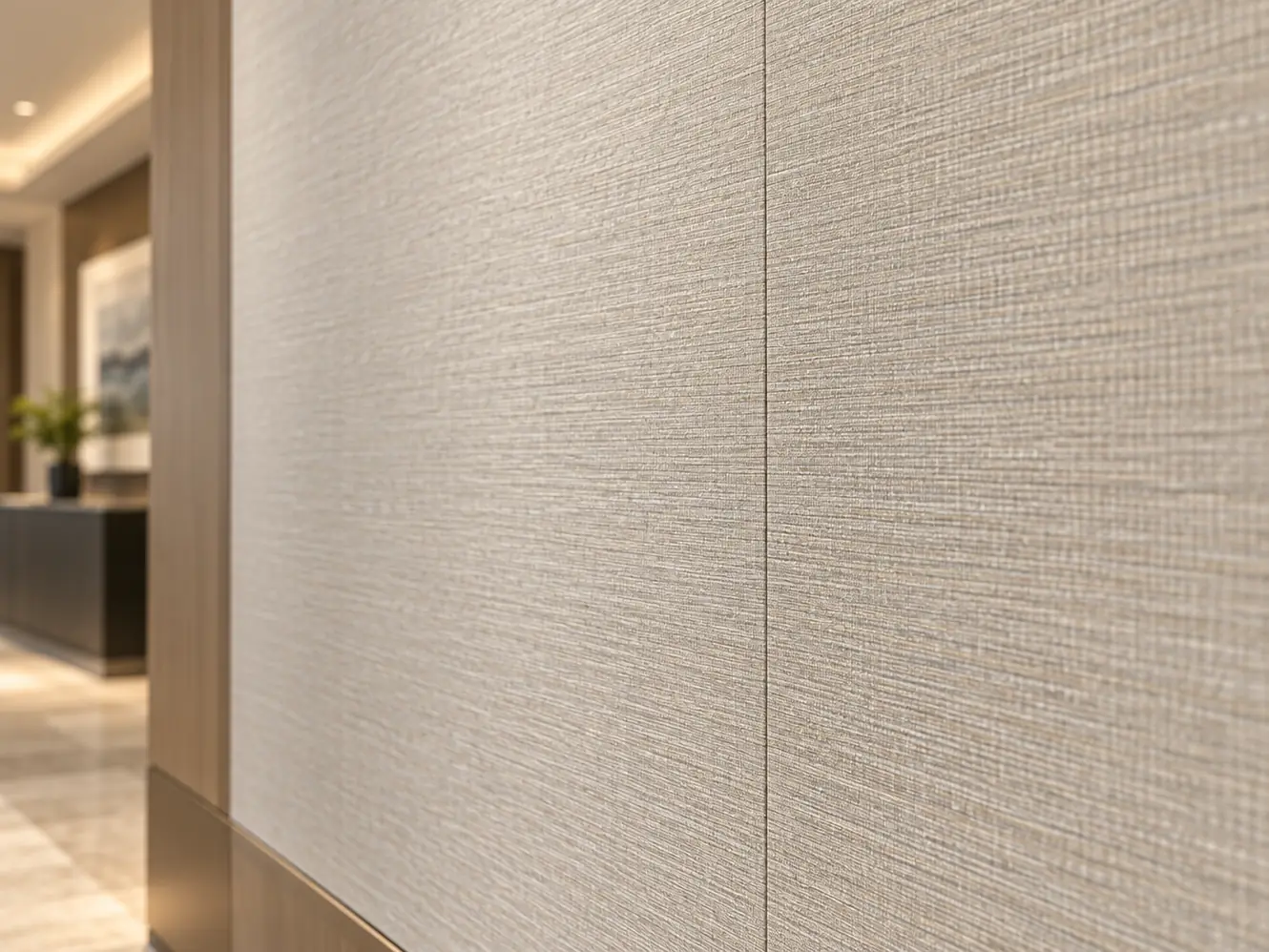
Distinguishing a decorative face from its backing and performance classification is essential. A woven-looking surface might be vinyl, a real textile, or a coated non-woven material. Always identify the actual product and read its technical data.
Start by understanding the options, then compare performance claims for the exact material.
WHAT MATERIALS ARE AVAILABLE?
These product families have different visual and practical characteristics. None is automatically suitable for every occupancy or wall.
Vinyl-faced commercial wallcoverings come in many prints and textures. Product-specific technical data is needed to assess wear, cleanability, fire performance and appropriate use.
Commercial vinyl supported by a woven or other textile backing. Backing construction, weight, adhesive and seam method all affect the selected product's suitability.
Decorative and contract-oriented non-woven products offer a range of patterns and finishes. Confirm the specific product's durability and maintenance requirements. See non-woven wallpaper.
Designer linen, cotton, silk-blend and woven textile finishes add depth. Delicate textile faces may stain or scuff more easily than selected commercial vinyl. See textile wallcoverings.
Engineered acoustic coverings and fabric-faced systems can serve sound-management goals when appropriately designed and tested. Decorative fabric alone does not guarantee acoustic performance.
Glass-fiber wallcoverings may be used as textured, paintable finishes. Specifications depend on weave, coating, paint system and the intended substrate.
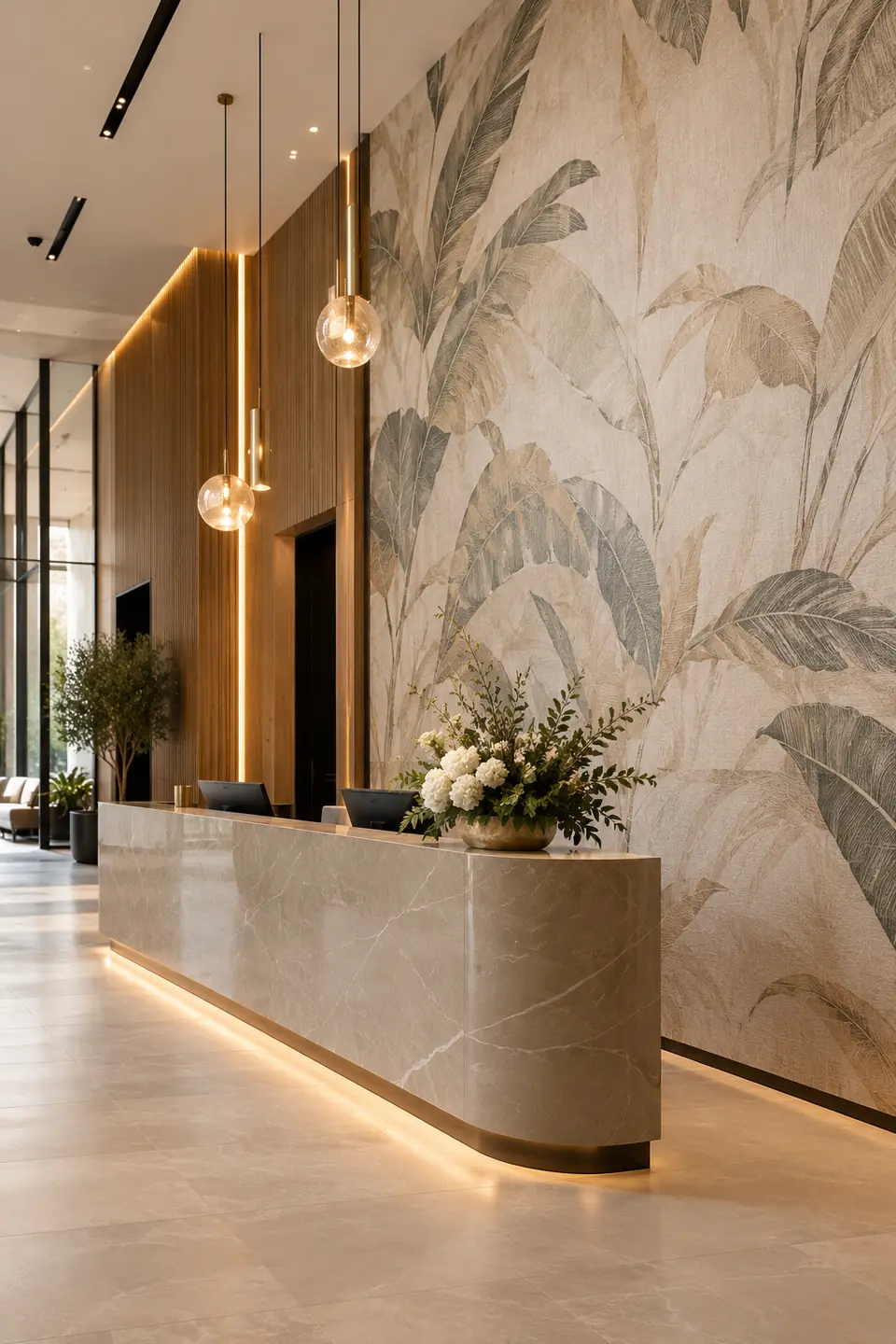
Branded graphics, panoramic art and custom murals support storytelling and signage-like feature walls. Evaluate print media, panel dimensions, cleanability and required performance. See custom murals.
Metallic-effect, grasscloth, cork-look and other unusual finishes offer distinctive texture for selected areas. Verify moisture, wear and care limitations. Learn about grasscloth.
COMMERCIAL VINYL CLASSIFICATIONS
Type I, II and III are classifications used in some commercial vinyl specifications to distinguish performance demands. The manufacturer's current technical sheet and the applicable project standard remain essential.
Often considered for areas with lower contact or decorative demands. Verify actual classification, wear properties and cleanability in the manufacturer's sheet.
Often selected for corridors, hospitality and frequently used business spaces where additional durability is specified. Check the product's actual test results.
Some commercial specifications use Type III for particularly demanding settings. Availability and relevant testing depend on the product and specification.
Important: These labels are not material backings or universal fire ratings. For example, "Type II" and "fabric-backed vinyl" answer different questions about a product.
MATERIAL COMPARISON
A quick comparison of typical design goals and what must be verified. This is not a substitute for product testing or manufacturer instructions.
| Type | Common Design Goal | Check Before Selecting |
|---|---|---|
| Commercial Vinyl | Durable-looking printed or textured surfaces | Wear performance, maintenance, fire-test data |
| Fabric-Backed Vinyl | Reinforced contract wall finish | Backing, adhesive, seams and specifications |
| Non-Woven | Decorative patterns and specialty finishes | Face coating, cleanability and application |
| Textile | Soft tactile premium appearance | Stain, contact and moisture sensitivity |
| Acoustical System | Sound reflection management | System design and acoustic test results |
| Woven Glass | Architectural texture, often paintable | Coating system and substrate compatibility |
| Printed Wall Graphics | Brand art, murals and feature walls | Print media, durability, panels and layout |
Actual performance varies by manufacturer and product even within the same category.
DESIGNED FOR THE ENVIRONMENT
Different areas of a building may need different coverings. Traffic, wall contact, cleaning practices and design impact all matter.
Guestrooms, reception walls and corridors may require different durability and maintenance profiles. Consider traffic and project-specific performance requirements.
Cleaning needs, wear, moisture and contact influence material selection. A decorative dining-room feature wall and a service passage may need different finishes.
Conference rooms, reception spaces and hallways can prioritize design, maintenance or acoustic considerations differently.
Printed graphics and refined textures can establish a brand's visual identity. Check abrasion and cleaning suitability for the intended location.
Specialized projects may require additional hygiene, cleanability and performance documentation. Verify requirements rather than assuming any commercial vinyl is suitable.
Textile, natural-fiber and specialty finishes can be considered for selected feature areas when exposure and cleaning conditions allow.
CHOOSING A COMMERCIAL WALLCOVERING
Use this sequence before committing to a product or ordering rolls for a large wall.
Is it a decorative feature, a regularly touched surface or a high-traffic corridor? Establish expected cleaning and contact first.
Determine whether the product is vinyl-faced, fabric-backed, non-woven, natural fiber or another construction.
Check relevant wear, cleaning and fire-performance information, and have the project team verify applicable building requirements.
Compare texture, sheen, seam visibility and color in the intended room lighting, not only in online photographs.
Substrate condition, moisture exposure, primer and maintenance requirements can make a material unsuitable even when its design is attractive.
Verify width, repeat, batch, lead time and trim allowances with the installer. Visit our commercial installation service for project planning.
PRODUCT DATA SHEET CHECKLIST
Commercial-looking wallpaper is not necessarily a code-compliant or appropriate product. Ask for technical documentation before selecting it.
Confirm the applicable codes and required test reports for the specific material and tested wallcovering system, not merely its marketing category.
Ask for comparable wear, scrub and stain test data, and follow the manufacturer's actual maintenance directions.
The same visual texture can appear on vinyl, fabric or non-woven products. Construction changes installation and care considerations.
Primer, adhesive, wall condition and compatibility depend on the product. Confirm these details before purchase and installation.
Material width, panel size, pattern repeat and manufacturer-approved seam method affect the finished visual result.
Some materials may show panel shading or be vulnerable to dampness. Review samples, wall lighting and available production batches.
Material selection and professional installation are separate stages. Once you understand which type you want, the installation plan can account for wall preparation, manufacturer methods, access and project schedules.
Dream Walls Studio works with selected San Diego offices, hospitality spaces, retail interiors and other business projects. The scope and selected material determine the installation approach.
Learn more about Commercial Wallcovering Installation in San Diego, wall preparation, or request a project estimate.
PLANNING A COMMERCIAL FEATURE WALL?
Share your selected material, wall photos, project dimensions and requirements. We can discuss the installation considerations and next steps.